
ROBUST SOLUTIONS FOR LARGE GAS DISCHARGES WITH A VISIBLE FLAME, HIGH AVAILABILITY AND GROUND-LEVEL RADIATION CONTROL
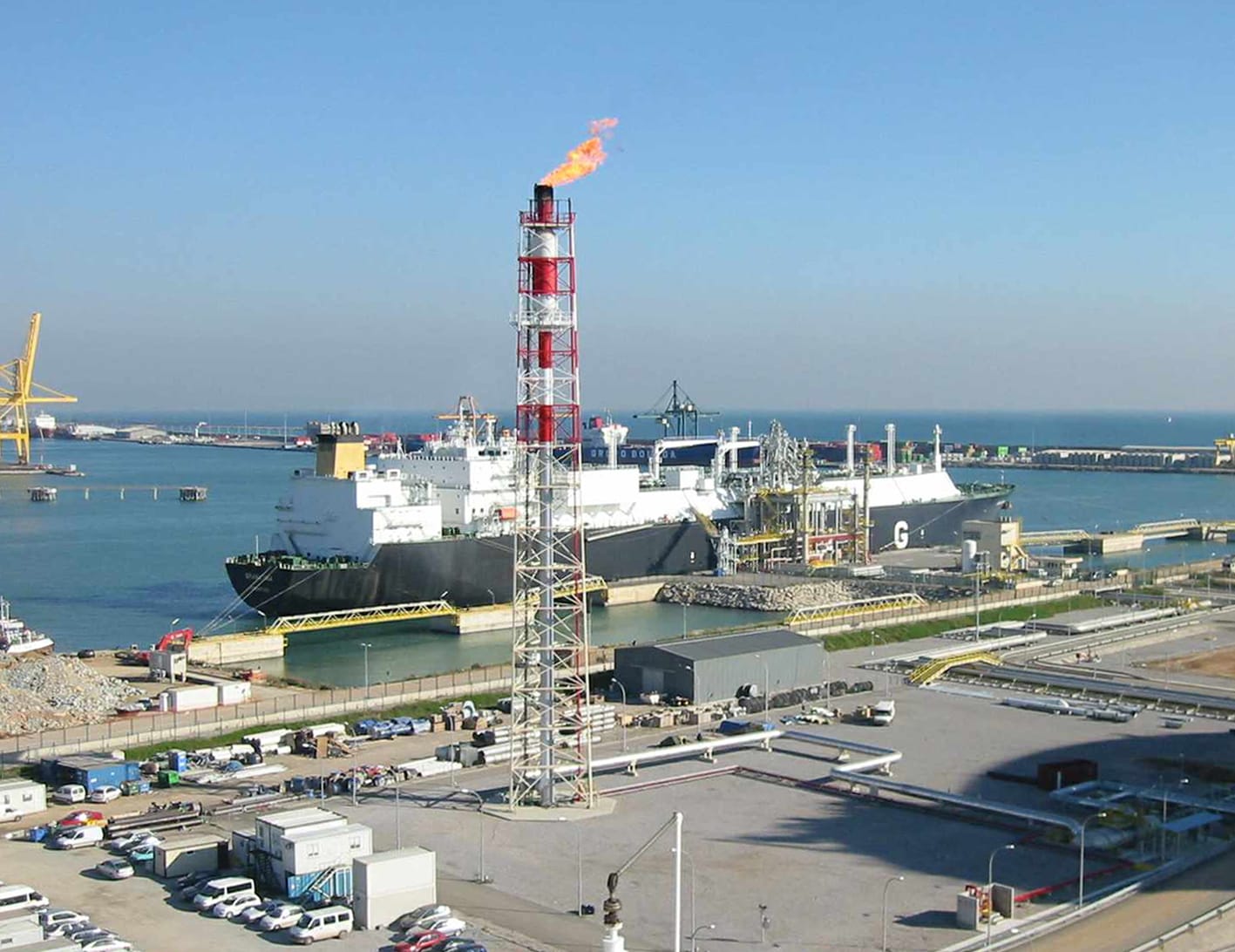
Flare stacks — also known as flare towers or flare stacks — are one of the most common solutions when a plant needs to safely burn large volumes of gas and raise the combustion point in order to reduce thermal radiation in operational areas.
At PREMATECNICA, we design and supply elevated flares tailored to the specific conditions of each installation: flow rate, gas composition, available pressure, requirements regarding smoke, radiation and noise, height, available space and environmental conditions.
Our expertise in process and energy solutions enables us to approach every elevated flare with a practical focus: process safety, mechanical robustness, plant integration and long-term operational reliability.
WHEN TO CHOOSE AN ELEVATED FLARE
An elevated flare is particularly suitable when a project needs to handle large volumes of gas; it provides a visible flame and is tall enough to comply with ground-level radiation limits.
It is usually a simpler and more cost-effective solution than a ground-mounted or enclosed flare when there are no severe restrictions on visibility, visual impact, noise or site layout. Compared to a cold vent, it provides controlled combustion of combustible gases. Compared to a thermal oxidiser, its primary function is not the continuous treatment of emissions, but rather to ensure safety and immediate availability during relief operations, purges, start-ups, shutdowns or emergencies.
OPERATION AND SETTINGS
The system collects relief gases from process equipment or units and conveys them to the burner situated at height. Before reaching the flare tip, the gas may pass through liquid separation, a knock-out drum and purge or sealing systems to protect the interior from air ingress. The gas then rises up the flare stack and is oxidised in the burner with the aid of pilot lights, ignition systems and flame detection. The design must control
flame stability, discharge velocity, tendency to produce smoke, radiation, noise and behaviour in the wind. The most common configurations include assisted and unassisted flares, smokeless or low-smoke designs, sonic or subsonic burners, single-point or multi-point systems, and self-supporting, wind-braced or derrick-supported flare stacks.
MAIN COMPONENTS
The flare tip or burner determines flame stability, combustion efficiency, smoke generation and the level of radiation. The flare stack carries the gases to the burner and must be designed taking into account height, structural loads, access, maintenance and integration with the plant.
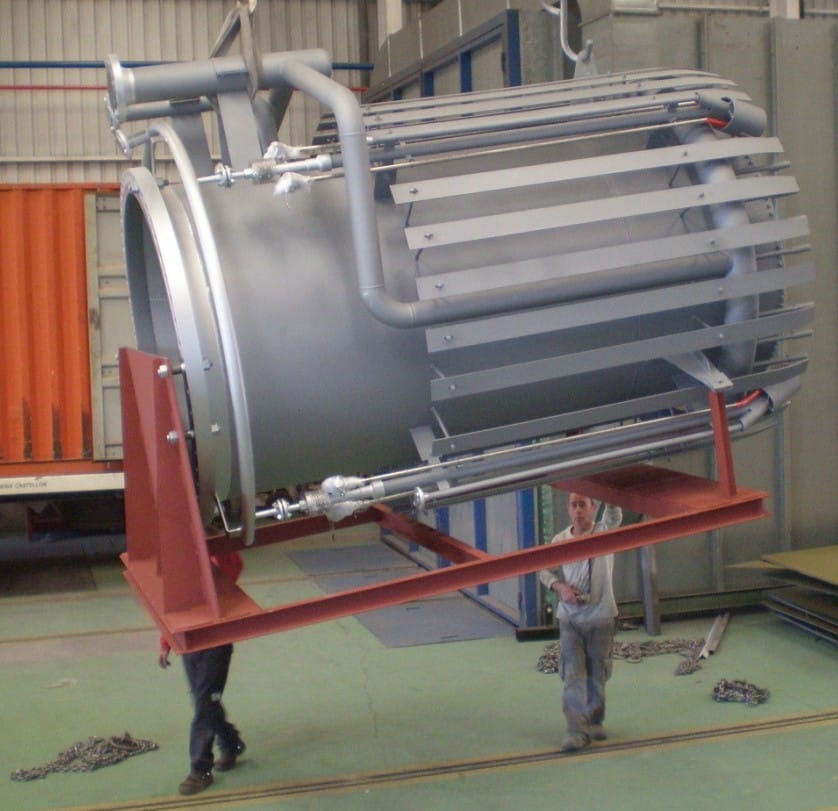
Pilot burners, together with ignition and flame detection systems, ensure that the released gas ignites immediately and enable the presence of a flame to be monitored. Purge and sealing systems prevent air from entering the flue and reduce the risk of flashback, burnback or internal combustion.
Where the project requires it, dynamic seals, molecular seals, knock-out drums, hydraulic seals, control panels and other auxiliary equipment may be incorporated.
PREMATECNICA DESIGNS AND IMPLEMENTS YOUR ELEVATED FLARE
Each elevated flare requires a specifically designed base. At PREMATECNICA, we analyse process conditions, relief scenarios, gas composition, available pressure, radiation and noise criteria, installation constraints, and operation and maintenance requirements.
Building on this foundation, we help to define the most suitable configuration and integrate the elevated flare stack with the rest of the plant, including pipework, utilities, control systems, assembly supervision, commissioning, maintenance, inspections and spare parts.
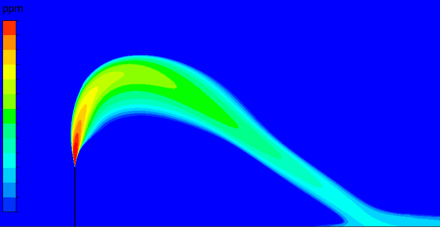
Where the project requires it, we carry out radiation and dispersion studies, or provide CFD support, to validate the solution and facilitate its safe integration into the plant.